

Commercial HVAC Winter 2026 Prep: How to Get Your Building Ready for Heating Season
The boiler that fails in January was often showing signs in September. The rooftop unit that cannot keep up during the first deep cold snap may have been short cycling, running long, or fighting a control issue for weeks before anyone noticed.
That is why commercial HVAC winter prep matters before heating season starts. For businesses in Western Massachusetts, a mid-winter failure can mean tenant complaints, lost work hours, emergency rates, and parts delays at the exact time every building in the Valley is calling for service. This guide explains what a real pre-season inspection covers, what you can spot yourself, how long equipment usually lasts, and when repair or replacement should be part of the conversation for your commercial heating system.
What a Pre-Season Heating Inspection Actually Covers
A pre-season heating inspection is not only a filter change. The right checklist depends on the equipment in your building, but the goal is the same: find safety issues, efficiency problems, weak parts, and freeze risks before winter exposes them.
Gas-Fired Rooftop Units and Furnaces
For gas-fired rooftop units and furnaces, the heat exchanger is one of the most important items to inspect. Cracks or corrosion can allow combustion gases, including carbon monoxide, to enter the supply air. A technician will also check combustion, clean burners, inspect the flame sensor, igniter, and pilot, and look for unstable or discolored flames that may point to a bad fuel-to-air ratio.
The flue and stack should be checked for blockage, nesting, corrosion, or other restrictions. The economizer damper should also be cycled through its full travel. A stuck-open outdoor air damper in January can waste a lot of heat without creating an obvious breakdown.
For buildings already showing heating issues, this is also the time to discuss commercial heating repair before the season gets busy.
Boilers and Hydronic Systems
Boiler inspections have a different focus. Water treatment levels should be checked because untreated water can lead to scale, corrosion, and efficiency loss. Safety relief valves and low-water cut-offs should be tested. Pumps should be checked for seal leaks, and air should be bled from radiation zones where needed.
The expansion tank also matters. A waterlogged tank can cause pressure swings and a weeping relief valve. If the system uses glycol, the concentration should be verified for the building’s exposure and local design conditions.
Freeze Protection and Cooling-Side Shutdown
This is the half of winter prep that is easy to skip. Idle condensate pans should be drained. Drain traps may need glycol. Heat trace on exterior condensate lines should be verified. Roof drains should be cleared so standing water does not turn into ice, added roof load, or drainage problems.
Freeze stats, low-temperature alarms, occupied schedules, unoccupied schedules, and holiday schedules should be tested before the first cold weekend. A good heating system can still waste energy or leave a space uncomfortable if the controls are wrong.
Warning Signs You Can Spot Yourself
You do not need a gauge set to notice many early warning signs. If your building had problems last winter, start by looking for patterns before the first hard cold snap.
Watch for:
- Utility bills climbing while occupancy and weather are similar
- Longer run times to reach setpoint than last winter
- The same zones causing complaints every year
- Short cycling, where the unit turns on and off in rapid bursts
- More service calls this year than last
- New noises, including rattling, screeching, banging at startup, or water hammer
- Rust, scale, or moisture staining near the base of a boiler
- A burning or sooty smell on the first heat call that does not clear within ten minutes
The first heat call of the season is one of the best diagnostic moments of the year. Turn the system on deliberately in early October and pay attention. If the same areas never feel right, this may also connect to uneven temperatures in commercial buildings, not just a single failing part.

How Long Commercial HVAC Equipment Actually Lasts
Age is a reason to investigate, not a verdict. A 15-year-old rooftop unit does not automatically need to be replaced, and a newer system is not automatically safe from problems if maintenance has been skipped.
ASHRAE service life data places packaged rooftop units around the mid-teens for median service life, with many well-maintained systems lasting longer. Boilers vary by type, with cast iron hot water boilers often lasting longer than rooftop equipment, while pumps, burners, controls, and other components age on their own timeline.
That last point matters. A 25-year-old boiler may still have useful life left, while the pumps, controls, or burners attached to it may be the real problem. The right question is not only, “How old is the system?” The better question is, “Which part is failing, and what is the smartest plan for the building?”
Is Your System Costing You Money Without Breaking?
A commercial HVAC system does not have to fail completely to become expensive. A unit that runs too long, short cycles, brings in too much outside air, or follows the wrong schedule can cost money every month while still technically “working.”
That matters in Massachusetts, where commercial electricity rates are well above the national average. EIA data for April 2026 showed Massachusetts commercial electricity at 24.02 cents per kWh, compared with a U.S. commercial average of 13.51 cents per kWh. In larger buildings, demand charges can add another layer because the bill may be affected by the highest short usage spike, not just average use.
Maintenance can help recover some of that waste. DOE guidance notes that HVAC maintenance and operating improvements can reduce energy costs without major capital investment. The savings come from getting the system back to doing what it was supposed to do in the first place.
Do You Have to Replace Everything at Once?
Usually, no. A good contractor should give you a priority order and a timeline, not just one large number. Replacement may start to make sense when a repair is more than half the cost of new equipment and the unit has already reached a large share of its expected service life.
Some parts are often replaceable on their own. Burners and controls can sometimes be updated on a sound boiler. Pumps, motors, drives, thermostats, and controls may also be handled separately. In a building with several rooftop units, one unit may be replaced while the others are staged across budget years.
Other failures force a bigger decision. A cracked heat exchanger in a gas rooftop unit is different from a worn belt. A compressor failure on aging equipment running a phasing-down refrigerant may lead to a broader replacement discussion. A boiler failure can also become more complicated if the distribution system was designed around the old equipment.
There is also such a thing as false economy. A new high-efficiency boiler installed on an untreated, scaled loop will not perform the way it should. Replacing one rooftop unit may not solve the problem if four identical units are close behind. New equipment can also underperform if the controls cannot sequence it properly.
For a deeper decision framework, review repair vs. replacement. If the equipment still uses R-410A, the R-410A phaseout may also affect how you compare repair cost, refrigerant availability, rebates, and long-term planning.

Why Fall Is the Window, Not January
Fall gives building owners more control. Technicians are easier to schedule, roofs are more accessible, and the work is not competing with a building-wide emergency.
A planned shutdown is also easier than a forced one. A boiler repair or equipment swap in October can often be scheduled around operating hours. The same work in January may involve temporary heat, tenant disruption, after-hours labor, and a much tighter timeline.
Lead times should be part of the discussion too. Before publishing, McCormick-Allum should insert current lead time ranges for rooftop units, boilers, and controls. Those numbers will make the article more useful because they show why waiting can limit options.
Rebate timing also matters. As of July 1, 2026, Mass Save requires pre-approval before installation for commercial heat pump projects. Emergency winter replacements can make that process much harder to manage.
What Winter Looks Like in Western Massachusetts
Heating season in Western Massachusetts usually starts in the fall and stretches well into spring. By the time cold mornings arrive in October, the system should already be tested. Waiting until the first 20-degree morning gives the building less room to respond.
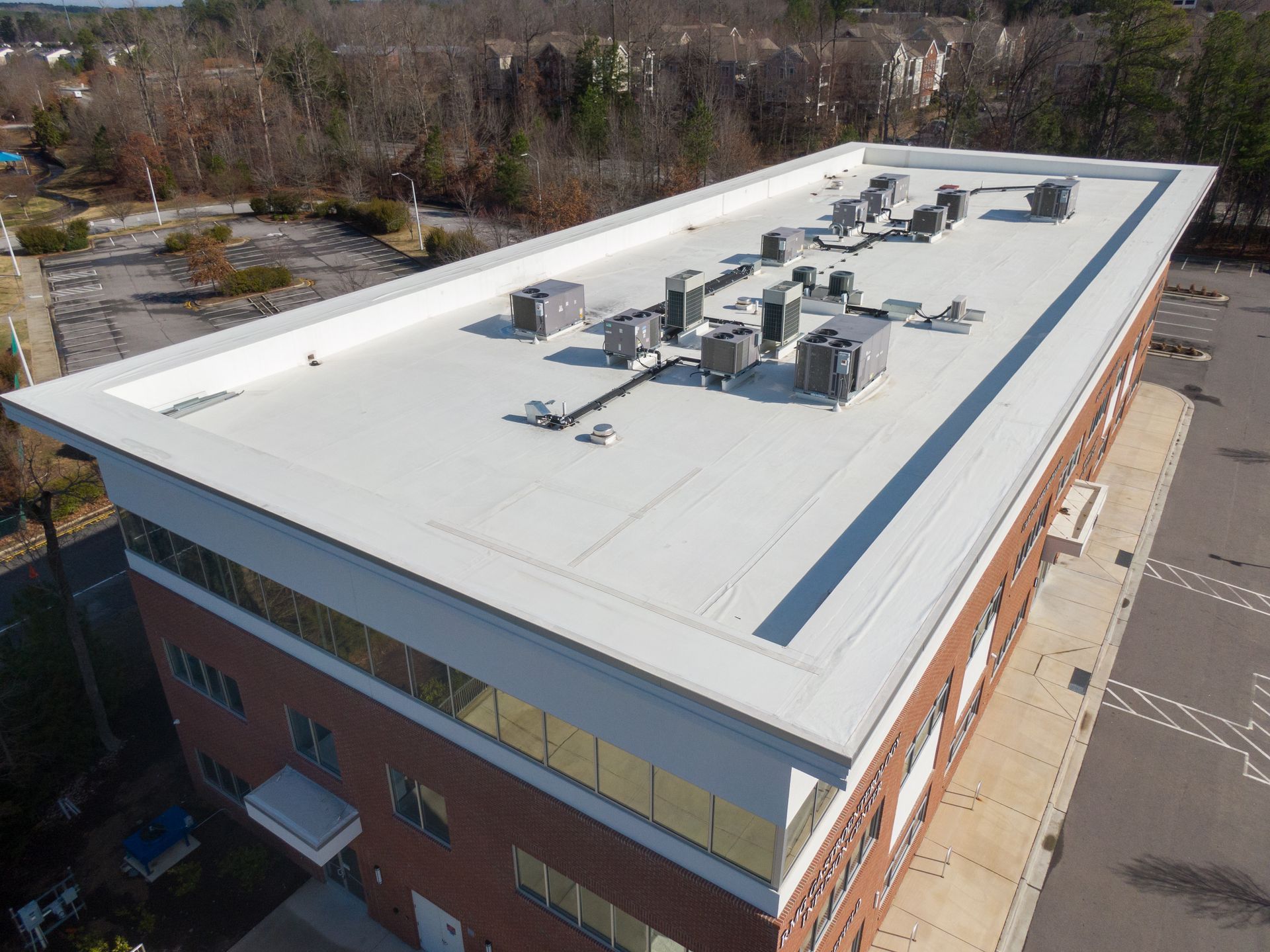
Local building stock also adds complexity. Springfield, Chicopee, and Holyoke have older mill, municipal, mixed-use, and retrofit buildings with steam, hydronic, rooftop, and legacy systems. Roof access, snow loading, drainage, controls, and distribution all matter.
For commercial buildings in Springfield, Chicopee, Holyoke, West Springfield, Agawam, Westfield, Longmeadow, East Longmeadow, Ludlow, and Wilbraham, winter planning should be based on the equipment that is actually in the building, not a generic checklist.
McCormick-Allum also providesSpringfield commercial HVAC services and serves businesses across its localservice area.
Schedule Your Pre-Season Heating Inspection
A pre-season inspection gives your building a better chance of entering November with working heat and a practical plan for anything that needs attention. McCormick-Allum has served Western Massachusetts since 1888, provides 24/7 service, and works with in-house tradespeople across commercial HVAC systems. To schedule service, call (413) 737-1196 or schedule service.
Frequently Asked Questions
How often should a commercial HVAC system be inspected?
At least twice a year, once before cooling season and once before heating season. Older equipment, high-runtime buildings, or systems with repeat issues may need more frequent checks between seasonal inspections.
How long does a commercial rooftop unit last?
ASHRAE service life data places packaged rooftop units around the mid-teens for median service life. Well-maintained units may last longer, while neglected equipment can fail sooner.
Can you replace just part of a commercial HVAC system?
Often, yes. Burners, pumps, motors, drives, and controls can sometimes be replaced on their own. A cracked heat exchanger or failed compressor on aging equipment may require a larger replacement decision.