

HVAC Repair vs. Replacement: Which Option Makes Sense?
No matter what time of year it is, reliable heating and cooling are important for commercial buildings. Comfortable temperatures help keep employees productive and create a better environment for customers and visitors. Like any piece of equipment, HVAC systems experience wear over time and eventually require service. When that happens, owners are left with an important decision: does it make more sense to repair the system or replace it?
There is no single answer that applies to every building. In some situations, a repair can restore performance and provide years of additional service. In others, replacing the equipment may provide greater value in the long run. At McCormick Allum, we help businesses evaluate their options and understand which direction makes the most sense for their building and budget.
Age Can Tell You a Lot
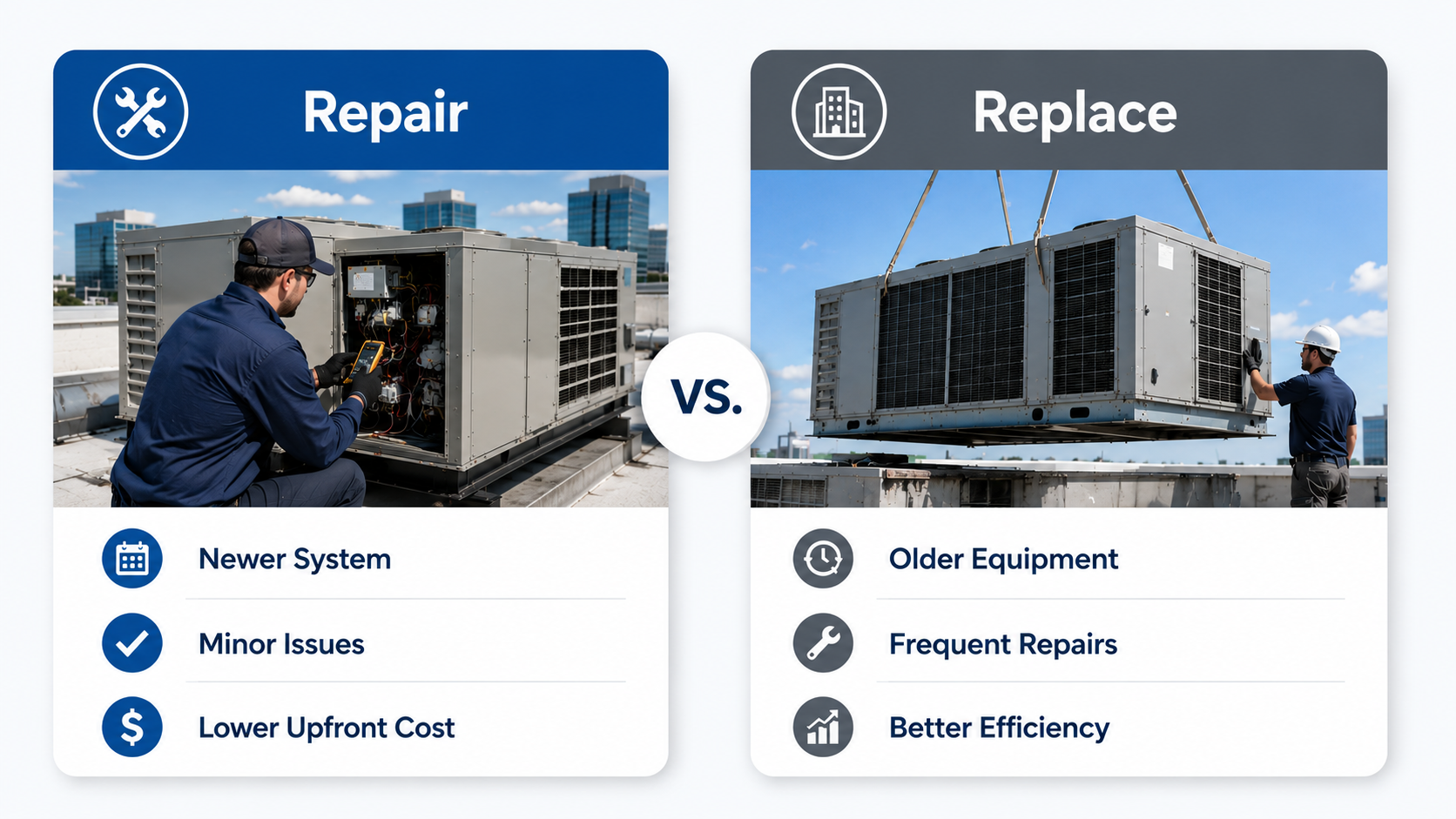
The age of a commercial HVAC system is usually one of the first things to consider. Equipment that is less than 10 to 12 years old can still have plenty of useful life left. If the system has been maintained and only requires a component replacement, repairing it may be a practical choice.
As systems approach 15 to 20 years old, reliability becomes harder to predict. Efficiency starts to decline, parts become harder to find, and some older equipment uses refrigerants that are no longer common. That does not mean replacement is automatically necessary, but it does make sense to look at the bigger picture before investing heavily in major repairs.
When Problems Start Happening Again and Again
Commercial HVAC systems contain many components that work together. When one major part begins struggling, additional stress is placed on other areas of the equipment. Replacing a compressor, heat exchanger, or another large component may solve today's problem, but it does not always prevent another issue from appearing later.
Businesses that find themselves scheduling repairs every season may be dealing with more than a single failure. Repeated service calls can become frustrating and expensive. At some point, it becomes worth asking whether continuing to invest in aging equipment is the best use of resources.
Looking Beyond the Immediate Repair Cost
A repair estimate only tells part of the story. Energy usage, future repairs, and unexpected downtime should also be considered. A system that performs well most of the year and has only required occasional service may still be a good candidate for repair.
On the other hand, if a major repair approaches 30 to 50 percent of the cost of a replacement, it may be time to compare the long term benefits of upgrading. Newer equipment can improve efficiency and help reduce the chances of a complete breakdown during the hottest or coldest months of the year.
Finding the Right Balance
Repairing an HVAC system is not always a bad investment. If the equipment is in good condition, has a strong maintenance history, and is not experiencing repeated problems, a repair can make complete sense. In many cases, businesses are able to extend the life of their systems and avoid unnecessary replacement costs.
If you are weighing your options, the team at McCormick Allum can help. We provide commercial HVAC repair, HVAC installation near me, and ongoing HVAC maintenance services for businesses throughout the area. Contact us today to schedule an inspection and discuss the best solution for your building.
Questions Worth Asking Yourself
How many times have we had to repair the system recently?
If service calls are becoming more common, it may be worth considering whether the equipment is nearing the end of its useful life. Occasional repairs are normal, but frequent issues can indicate larger concerns.
Will fixing this solve the problem for the long term?
Some repairs provide years of dependable performance. Other situations involve multiple aging components, making it possible that another issue could appear in the near future.
Are energy costs increasing?
Higher utility bills can sometimes point to declining efficiency. Equipment that has to work harder to maintain comfortable temperatures can increase operating expenses over time.
Is the system affecting everyday operations?
Uncomfortable temperatures, hot spots, cold spots, and employee complaints can all impact the building environment. Reliability matters just as much as repair costs.