
What the R-410A Refrigerant Phaseout Means for Your Commercial HVAC System
Business owners across Western Massachusetts are hearing more about the R-410A refrigerant phaseout, and it is easy to misunderstand what it means. Some assume R-410A is suddenly banned or that every existing commercial HVAC system needs to be replaced right away. That is not the case.
Your current R-410A system can continue to run and be serviced. The bigger change is what happens when you are planning a new system, comparing repair costs, or trying to qualify for Mass Save incentives. Newer systems using low-GWP refrigerants such as R-32 and R-454B are becoming the better long-term option for many commercial buildings.
McCormick-Allum has served Western Massachusetts businesses since 1888. As refrigerant rules and rebate programs change, our role is to help building owners understand the options clearly, without panic or pressure.
What Is the R-410A Phaseout?
R-410A has been one of the most common refrigerants used in air conditioning and heat pump equipment for many years. It replaced older refrigerants and became a standard choice across both residential and commercial HVAC systems.
The concern with R-410A is its high global warming potential, often shortened to GWP. Federal rules under the AIM Act are reducing the production and use of high-GWP HFC refrigerants over time. That is why the HVAC industry is shifting toward newer low-GWP refrigerants.
For commercial building owners, the short version is simple: R-410A is being phased down, but existing systems are not being forced out overnight. The decision point comes when you are repairing an older system, pricing a replacement, or trying to use available rebate programs.
No, There Is Not a Simple “Replace It Now” Deadline
One of the biggest points of confusion has been the installation deadline for older R-410A equipment. Earlier guidance created concern that certain R-410A systems would no longer be installable after January 1, 2026. That deadline has since been removed for eligible equipment that was manufactured or imported before the cutoff.
In plain English, some older R-410A equipment that is already in the supply chain may still be legally installed. That does not automatically make it the best choice for your business.
The better question is not, “Am I allowed to install it?” The better question is, “Will this equipment qualify for rebates, lower my operating costs, and make sense five or ten years from now?” For many Western MA businesses, newer low-GWP systems are becoming the smarter investment.
R-410A vs. New Low-GWP Systems: What Changes for Businesses?
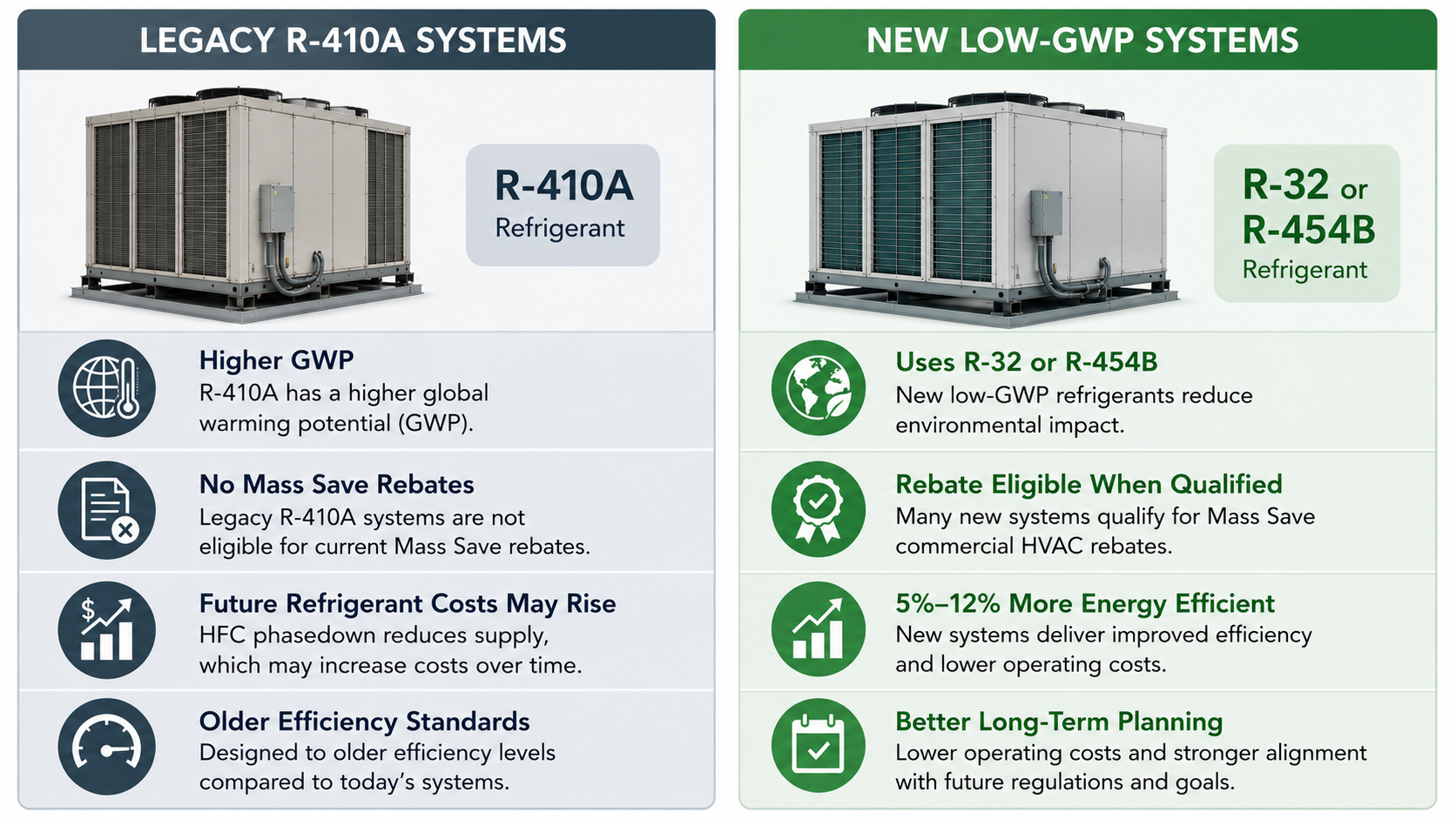
Not every business needs to replace an R-410A system right away, but the differences matter when you are planning a repair, replacement, or rebate-eligible upgrade. Older R-410A systems can still be serviced, but newer low-GWP systems may offer better efficiency, stronger long-term planning, and access to Mass Save incentives when the equipment qualifies.
Mass Save Rebates: A Major Reason to Look at Newer Systems
Mass Save rebate eligibility is one of the clearest reasons to consider newer refrigerant equipment. Legacy R-410A systems are no longer the direction of rebate-eligible equipment. To qualify for many current incentives, new systems need to use next-generation low-GWP refrigerants such as R-32 or R-454B.
That matters because rebates can significantly change the real cost of replacement. A cheaper older system may look appealing at first, but if it does not qualify for available incentives, the final cost comparison may change.
If your business is planning an HVAC upgrade, our related guide to Mass Save commercial HVAC rebates can help explain what to consider before choosing equipment. McCormick-Allum can also review current system options and help you understand what may qualify before you move forward.
New Refrigerants Can Help Lower Energy Costs
The move away from R-410A is not only about regulation. Newer systems using R-32 or R-454B are also designed for stronger performance and better efficiency. Depending on the system, equipment design, and application, next-generation systems may use roughly 5% to 12% less energy than older R-410A models.
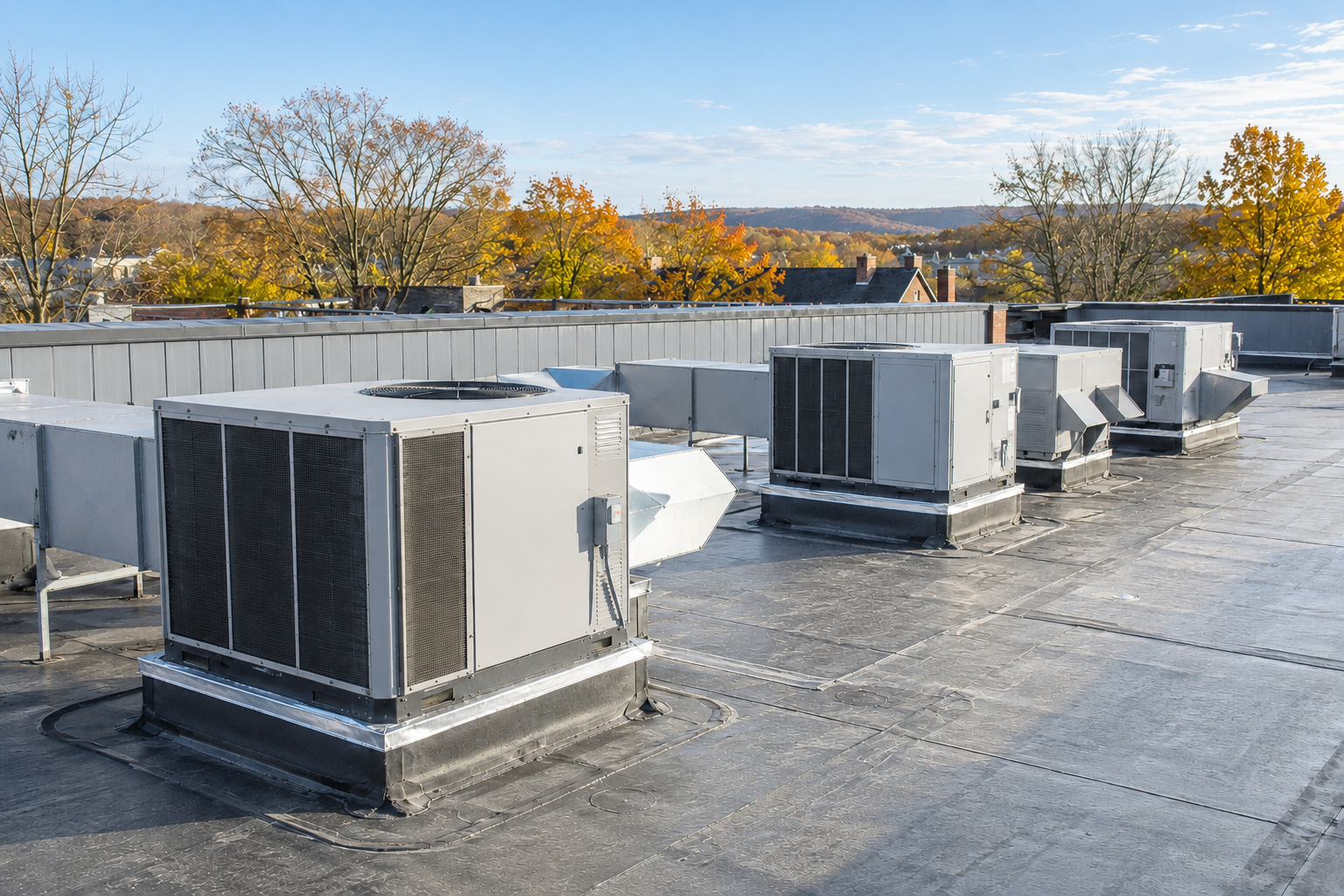
For a Western Massachusetts business running large rooftop units, packaged systems, or heat pumps through long cooling and heating seasons, that difference can matter. A 10% reduction in energy use can create noticeable monthly savings, especially in larger buildings with steady occupancy.
Lower energy use also helps reduce strain on equipment. When a system is properly sized, installed, and maintained, improved efficiency can support better comfort, fewer operating headaches, and lower overhead over time.
Why Future R-410A Repairs May Become More Expensive
Even though existing R-410A systems can still be serviced, the supply picture is changing. The federal HFC phasedown is reducing the total production and consumption of HFCs over time. By 2029, the phasedown schedule calls for a steep reduction compared with the original baseline, and the long-term target is an 85% reduction by 2036.
That does not mean R-410A disappears tomorrow. It does mean the refrigerant market is moving in one direction. As supply tightens, service refrigerant can become more expensive and harder to plan around.
This is especially important if your system has a history of refrigerant leaks. A minor repair on a healthy system may still make sense. Repeated refrigerant-related service calls on an aging unit are different. At that point, future repair costs and refrigerant availability should be part of the replacement conversation.
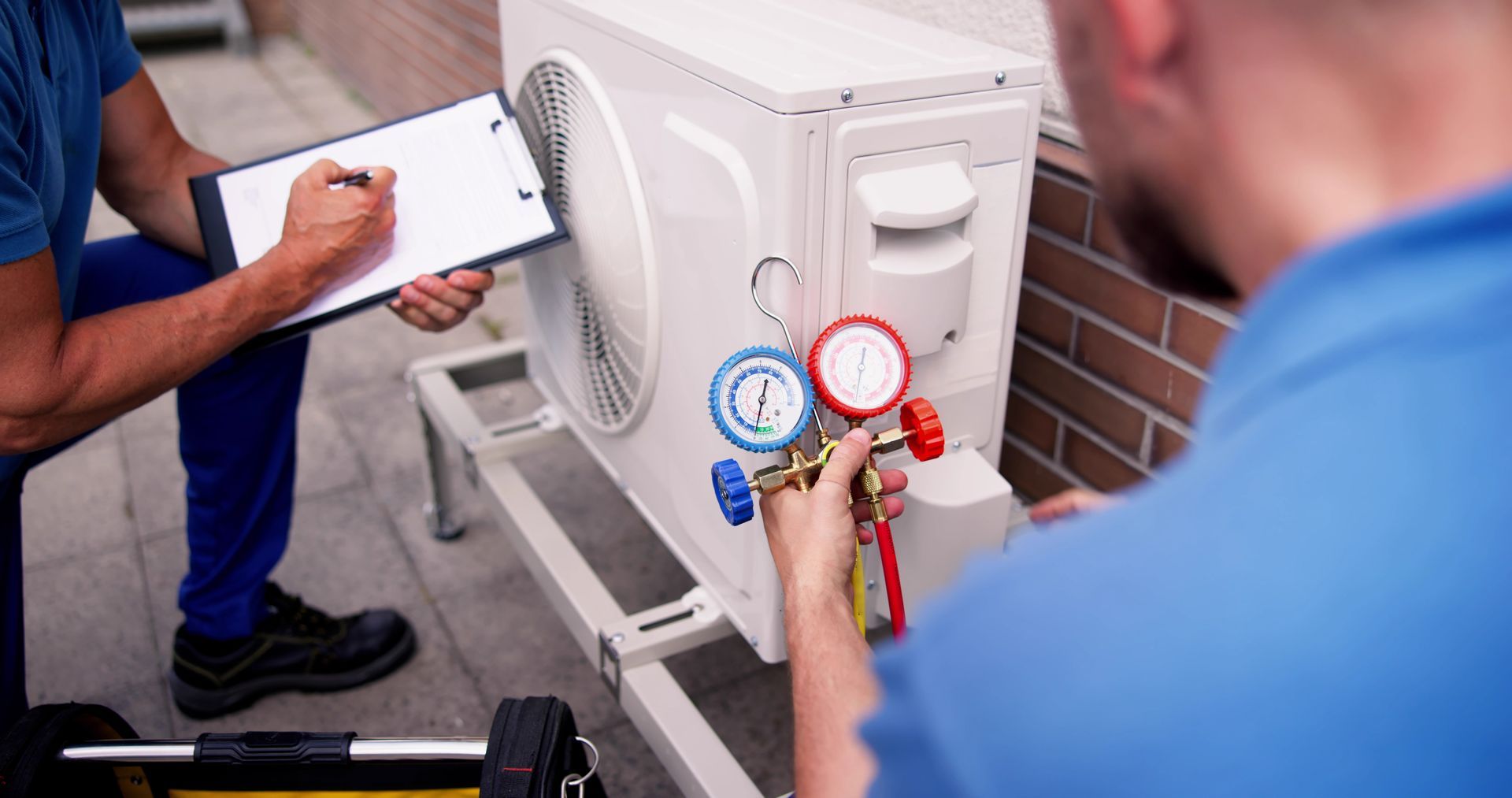
R-32 and R-454B: What Building Owners Should Know
Many new HVAC systems are moving toward R-32 and R-454B. These are low-GWP refrigerants designed to reduce environmental impact while supporting strong system performance.
Both are classified as A2L refrigerants. That means they are considered mildly flammable under industry safety classifications. The word “flammable” can sound concerning, but A2L refrigerants are being widely adopted and are designed to be used safely when equipment is installed and serviced correctly.
For building owners, the practical takeaway is straightforward. These systems require the right equipment, the right installation practices, and trained technicians who understand manufacturer requirements and applicable codes. This is not a DIY transition or a place to rely on guesswork.
Cold-Climate Performance Matters in Western Massachusetts
Western Massachusetts businesses need HVAC systems that can handle real seasonal swings. A commercial system may need to cool a building through humid summer weather and support heating during cold Pioneer Valley winters.
Newer refrigerants such as R-32 and R-454B transfer heat more effectively than R-410A in many system designs. That can support stronger heat pump performance, especially when equipment is properly matched to the building. For buildings considering future heating upgrades, refrigerant and equipment selection can affect comfort during Western MA winters.
For offices, retail spaces, medical buildings, schools, and other commercial properties in Springfield, Chicopee, Holyoke, Westfield, West Springfield, and nearby areas, cold-weather performance is not a small detail. It affects comfort, utility bills, and day-to-day reliability.
Massachusetts Rules and General Guidance
Massachusetts has its own HFC regulation, known as 310 CMR 7.76. For many standard commercial rooftop units and office air conditioning systems, the federal transition is the main rule business owners will hear about. State-level rules may apply more directly to certain larger equipment categories, refrigeration systems, and specialized applications.
This article is general guidance, not legal or compliance advice. The right answer for your building depends on your equipment type, system age, refrigerant, service history, and future plans.
If you operate a larger facility, use specialized refrigeration, or have equipment such as chillers or VRF systems, it is especially important to review the specifics before making a decision. McCormick-Allum can help assess your current system and explain your options based on the equipment you actually have.
Frequently Asked Questions
Is R-410A banned in 2026?
No. Existing R-410A systems are not banned. They can continue operating and can still be serviced when repairs make sense.
Can I still install an R-410A system?
Eligible R-410A equipment that was manufactured or imported before the cutoff may still be installable. That does not always make it the best choice, especially if you want Mass Save rebates, better efficiency, and long-term repair stability.
Can I still repair my existing commercial R-410A system?
Yes. Existing R-410A systems can still be repaired and serviced. If the system is leaking refrigerant or needing frequent repairs, it is worth comparing the repair cost against replacement options.
What refrigerant will a new commercial system use?
Many new systems are moving to low-GWP refrigerants such as R-32 or R-454B. The right option depends on the equipment type, building needs, manufacturer specifications, and current program requirements.
Will a new low-GWP system qualify for Mass Save rebates?
Many newer low-GWP systems may qualify for incentives, but eligibility depends on the specific equipment and current Mass Save requirements. R-410A systems are no longer the direction of rebate-eligible equipment, so rebate eligibility should be reviewed before purchase.
Repair, Replace, or Budget for Later?
The right decision depends on your system’s age, condition, repair history, and importance to your building. If your R-410A system is newer, reliable, and only needs a minor repair, continuing to service it may be reasonable.
If the system is older, leaking refrigerant, using more energy, struggling during peak weather, or requiring frequent repairs, replacement may be the better financial decision. That is especially true if the new equipment qualifies for rebates and helps lower monthly utility costs.
For some businesses, the answer is repair and monitor. For others, it may be time to plan a commercial HVAC replacement in Western MA before the system fails during a busy season. McCormick-Allum can compare repair costs, rebate opportunities, energy use, and long-term service risk so you can make a practical decision.
Why Experience Matters During This Transition
Refrigerant changes affect manufacturers, distributors, contractors, and building owners in different ways. A simple online answer may not apply to your exact system.
Commercial HVAC in Western Massachusetts is not one-size-fits-all. A small office, retail shop, medical space, school, industrial building, and multi-tenant property may all need different recommendations. Equipment access, roof layout, electrical capacity, controls, ventilation, operating hours, and comfort demands all matter.
McCormick-Allum has been helping businesses in this region since 1888. As the industry moves away from R-410A and toward low-GWP refrigerants, we help customers make decisions that fit the building, the budget, and the future service plan.
Talk With a Western MA Commercial HVAC Team
The R-410A phaseout does not mean every business needs to replace its HVAC system right away. It does mean business owners should make informed decisions before spending money on major repairs or new equipment.
McCormick-Allum provides commercial HVAC service, repair, maintenance, and replacement throughout Western Massachusetts, including Springfield, Chicopee, Holyoke, Westfield, West Springfield, Agawam, Ludlow, Wilbraham, Longmeadow, and East Longmeadow. If you have questions about your current R-410A system or want to compare repair and replacement options, contact McCormick-Allum to schedule service or speak with our team.